Headphones 1.18: Prototype #2

Headphones 1.18: Prototype #2

 20181017_102942 (1).jpg


The Project

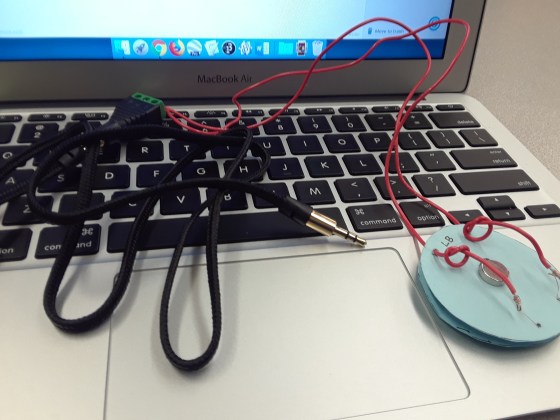
My headphones prototype #1 worked but wasn’t loud enough. The goal of prototype #2 was to find out if we can change one variable in the experiment in order to find a way to make the headphones more louder and clearer. 

I changed one design variable to see how it affected sound volume. The design variable that I change was to wind the wire 50 times instead of 100 times.

I kept all the other variables the same to be able to check if it was only one thing affecting the fact that the headphones weren’t as loud and if it wasn’t then maybe in the future I’ll change another variable to test it out. 


Data

The value of the number of times I winded the wire for my prototype #1 was 100 times.

The value of the number of times I winded the wire for my prototype #2 was 50 times.

My prototype #2 sounded more louder and clearer than prototype #1.


Claim

My prototype #2 produces louder sound 


Reasoning

My data suggests that this is true because prototype #2 had a clearer and sounded more louder then my prototype #1 which was less louder and didn’t sound as clear but what I was able to feel vibration.


Significance

If I were to make a prototype #3, I would increase the number of magnets in order to get the loudest sound.


Headphones 1.8: What Are Headphones, Actually?

Headphones 1.8: What Are Headphones, Actually?

Requirement Of A Sound Machine-

In order to be able to make machine that could produce every possible sound, it would need to be able to vibrate at different speeds in order to create that frequency to make sound.

In order to be able to make all of the sounds that a human can hear, the machine would need to vibrate at a frequency of up to 20,000hz which is the highest pitch most people can hear.

What Is A Solenoid?

A solenoid consists of both electromagnet as well as permanent magnets. When the electricity to the electromagnet turns on, the permanent magnet and the electromagnet could either attract or repel each other which is how they move.

A solenoid can be able to move a rod forward and backwards. A few examples of things that use a solenoid are or can be, robots, car engines, electric door locks, as well as doorbells.

You control a solenoid by turning on your battery pack and once doing so that’s when electricity to the electromagnet is turned on and the permanent magnet and electromagnet attract or repel each other.


Making A Solenoid Vibrate

If you repeatedly turned on a solenoid on and off quickly, it would make the rod move forward and backward at a very high speed.

The faster you turned it on or off, the faster the vibration of the rod will be.

When your phone’s plays music, what kind of electrical signal does it send your headphones?

The kind of electrical signal that it will send to your headphones is the frequency. When listening to music, you are able to listen to music because of the many frequencies there is to hear which is caused by vibrations in the electrical signal.


What Are Headphones?

Base your answer above, what are headphones, actually?

Based on this whole investigation I am able to confirm that headphones is the amount of frequencies caused by the vibration. I hope you’ll understand that and if not allow me to break it down for you. Let’s say that you’re going to play some music or something, the amount of vibrations there is in your headphones is what causes the frequences to active and once that happens it’ll when it send the electrical single. 


Headphones 1.3: Sound Lab Report

Headphones 1.3: Sound Lab Report

Background Info:

In class we did and assignment where we were doing test around the room checking items to see how exactly sound is made/produced. When testing, I have achieved many results so, allow me to share those information down below.

Questions:

The first scientific I am be investigating is how is sound made.

The second scientific I am investigating is what determines the pitch of sound.

Data/Evidence:

The small tuning fork vibrated faster. 

The violin string vibrated while being played.

The singers vocal chords vibrated while she sang. 

The ukulele vibrated when it was played.

The cymbal vibrated when it was played.

The foil showed that the tuning fork vibrated.

The drum vibrated when it was hit.

When humming, I was able to feel my throat vibrating. 

The tuning fork was vibrating when it was hit but also made a sound.

The smaller tuning fork had a higher pitch and the larger tuning fork had a lower pitch.


Analysis:

All of the instrument vibrated when making sound.

The smaller tuning fork vibrated about 2x faster than the larger tuning fork.


Claim:

The sound is caused by the vibration of objects.

The pitch of a sound is determined by the speed/frequency of vibration. The faster the vibration, the higher the pitch. 


Reasoning:

My research suggest that sound is caused by vibrations because all of the instruments vibrated when making sound. 

My research suggests that the pitch of a sound is determined by the speed/frequency of the vibration because the tracings showed that the higher tuning fork vibrated faster.


Significance:

This means if I want to build a machine that can make any sound, the machine must be able to vibrate at any frequency.